
Detail of butterfly ice sculpture
Detail of ice sculpture, Loveland Fire and Ice Festival 2018. iPhone photograph.
Detail of butterfly ice sculpture
Detail of ice sculpture, Loveland Fire and Ice Festival 2018. iPhone photograph.
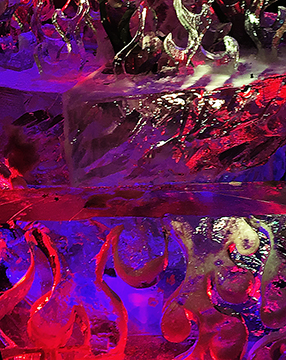
Closeup crop of ice sculpture
It’s almost Valentine’s Day, so here’s a crazy-tight crop of an ice sculpture featured at Loveland, Colorado’s Fire and Ice Festival. The resolution is terrible, but I love the colors. iPhone photograph.
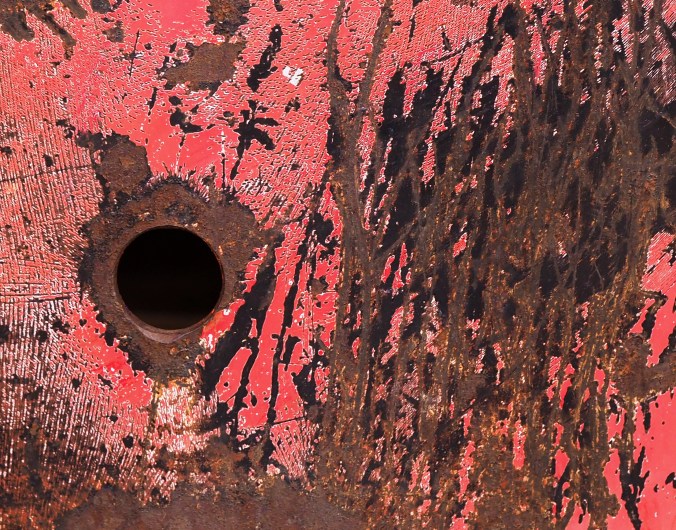
Iron age no. 19
Back to abstracts.

Crested oropendola
That bright blue eye!

Hawk-headed parrot
Another bird species that inhabits the Amazon rainforest. I finally had the luck of getting a catchlight in the eye, because this enclosure was so well lit.

Spangled cotinga
This little tropical fellow (only the males boast the brilliant turquoise-and-jade plumage) has a most excellent name. The word cotinga comes via French from the Tupi, an indigenous people living in what is now Brazil. (Interestingly, Tupi is also the name of a software program for 2D animation whose logo is very reminiscent of cotinga plumage.) There are several other species of cotinga, too, all of them gorgeous and apparently much sought out by bird-watchers.
Some good news: Wikipedia says that the spangled cotinga is “not considered to be threatened because of its wide distribution.” It lives in the rainforest canopy, however, so I hope this status continues despite deforestation, which does threaten some other cotinga species (again, according to Wikipedia). No bird species should be lost if it can possibly be helped—but especially not such a beautiful one.


Well, no bones except in the clownfish. Sometimes I wish I had been a marine biologist studying invertebrates. These photos remind me of the old aquarium in La Jolla, California, right next door to the Salk Institute. That little Art Deco building housed a circular array of only a dozen or so medium-sized tanks, and those tanks were filled with anemones of many colors. The effect was breathtaking. These iPhone photographs were taken at the Denver Zoo’s Tropical Discovery building.

lionfish
My 60 mm lens, despite its wide aperture, simply couldn’t let in enough light to capture decent photographs of the animals in the dark tanks of the Denver Zoo’s Tropical Discovery house. Things improved after I switched to my iPhone. I’m frequently disappointed in the performance of my iPhone’s camera, and then it pulls off something like this. A biological note: Lionfish, like so many other beautiful invertebrates, reptiles, and amphibians, are venomous.


No leaping going on while I was present. I hope to return to get some sharper photos and get down a couple of identifications that I missed. Although a crocodile is technically not a lizard, I figure it’s close enough to fit with the rest of these. Although the one here appeared positively blissed out, there’s really no other way for a crocodile to look when its mouth and eyes are closed, is there?
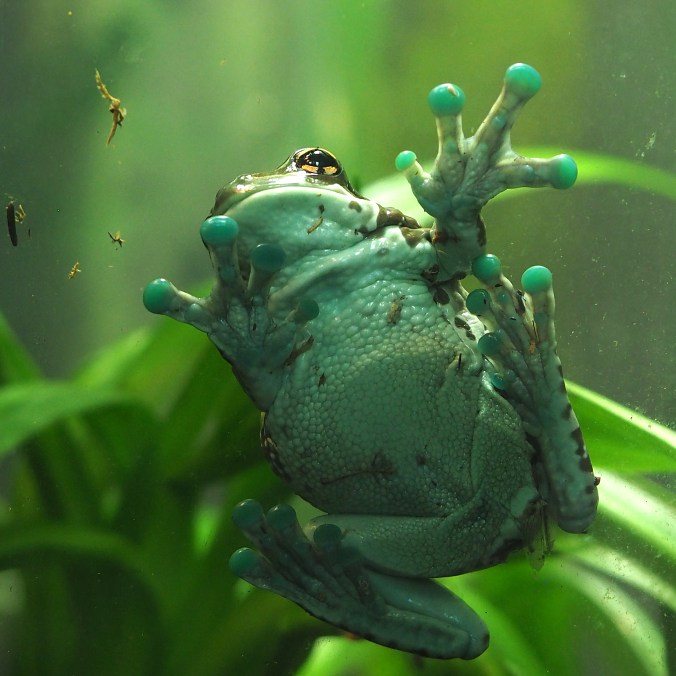
Amazon milk frog
Now for an excursion into the humid hallways of “Tropical Discovery,” the facility at the Denver Zoo that houses reptiles, amphibians, fish, and a few invertebrates. Despite the name, some animals here are not tropical species—but this lovely jade-colored frog is.
 VAPOR AND FLOW