True blue skew ~

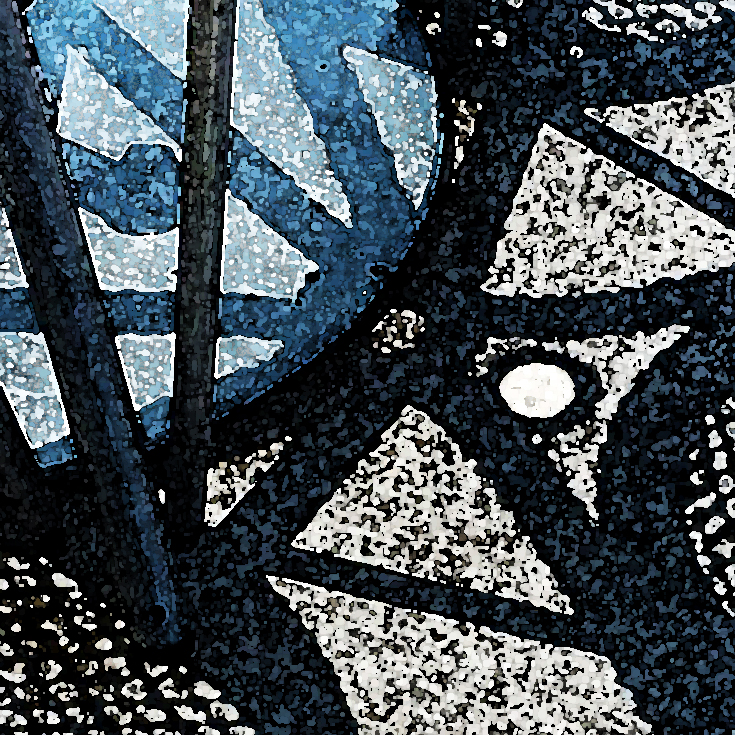
Steak 'n Shake table and chairs no. 1

Steak ‘n Shake table and chairs no. 1

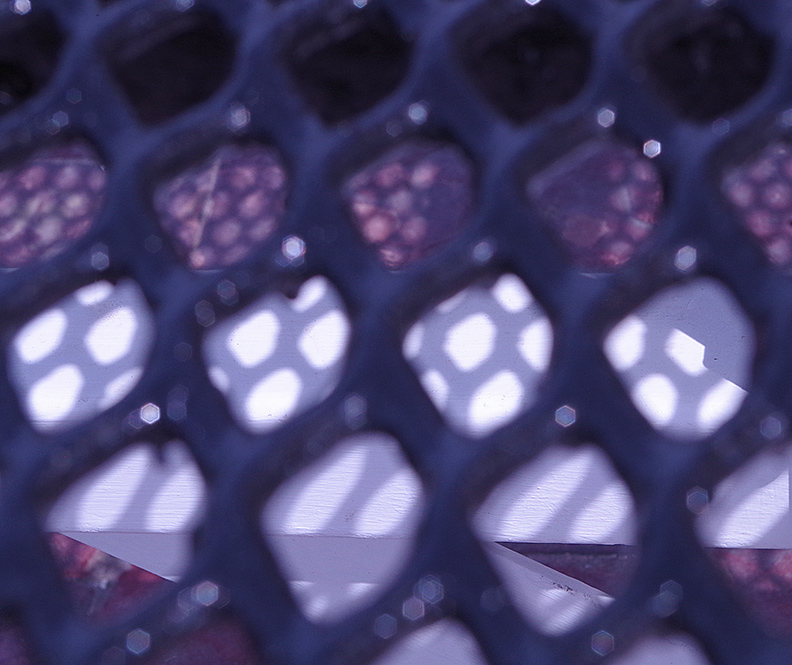
I’ve been having a good time playing with an iPhone photograph I took of tables and chairs at a Steak ‘n Shake in Goodland, Kansas. (I certainly took a lot more iPhone pix on my trip than I remembered having done.) Above is the version I like best. It’s highly cropped, with a watercolor filter applied, vibrance ramped up, blue ramped up. My favorites among the photographs I take tend to be those that look most like abstract paintings or that are clearly influenced by abstract painting. Applying a filter can, on rare occasions, turn an image into something more interesting. It also can, on rare occasions, save an image that is not sharp enough to work as a conventional photograph and make it worthwhile.

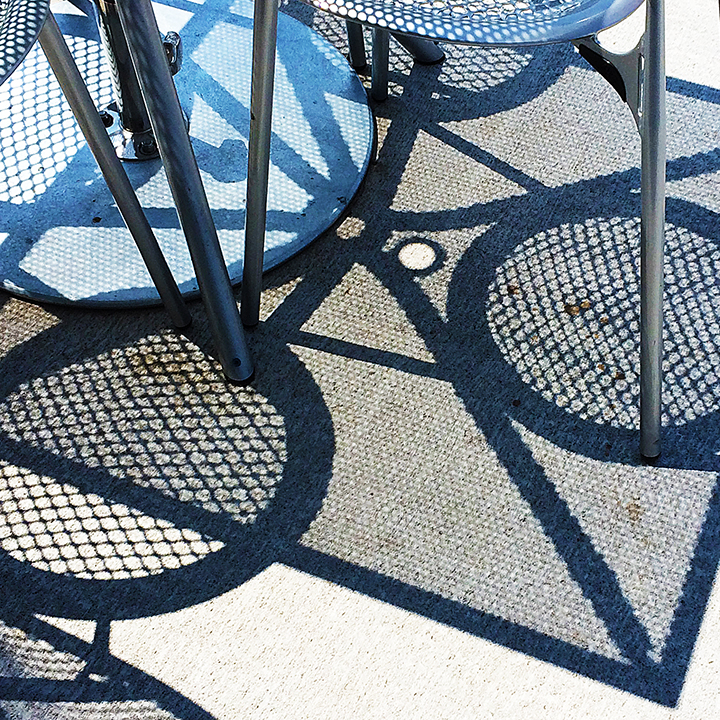
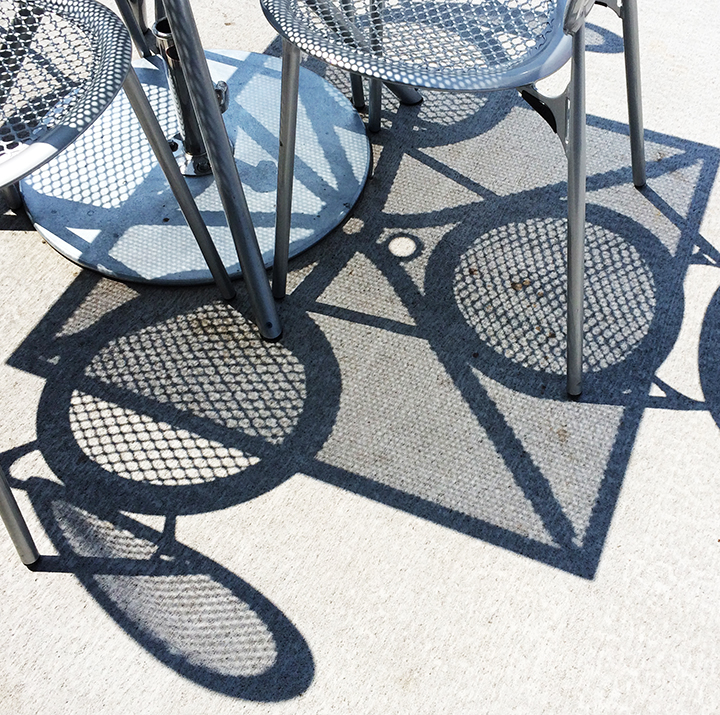
Here are two crops without the watercolor filter, and below those, the original photograph. I’m interested in feedback, so vote for your favorite if you’re so inclined. As a bonus, here’s a video of Lucinda Williams singing “Am I Too Blue.”

Steak 'n Shake table and chairs no. 3

Steak ‘n Shake table and chairs no. 3

Steak 'n Shake table and chairs no. 2

Steak ‘n Shake table and chairs no. 2

Steak-n-Shake-chairs-0164

Steak ‘n Shake table and chairs, original shot

Waiting for supper ~

Glasses and knife

Glasses and knife

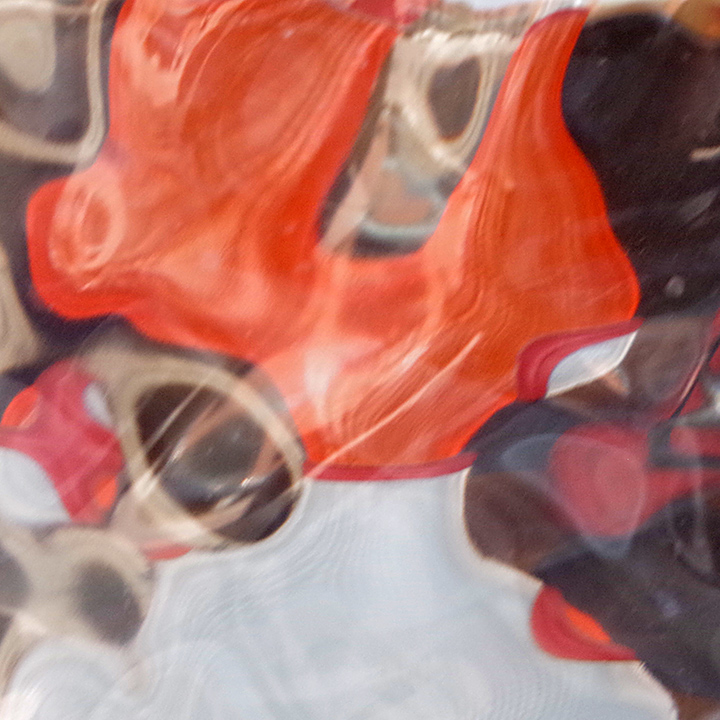
Yet another iPhone photo. Fort Collins, Colo., where I could actually sit outside at a patio table on a 90-degree day without feeling faint. True, I was in the shade, but still….something not possible for me in Southern Illinois.

Passing through ~

Gallery Floor no. 1

Gallery Floor no. 1

Gallery Floor no. 2

Gallery Floor no. 2

Gallery Floor no. 3

Gallery Floor no. 3

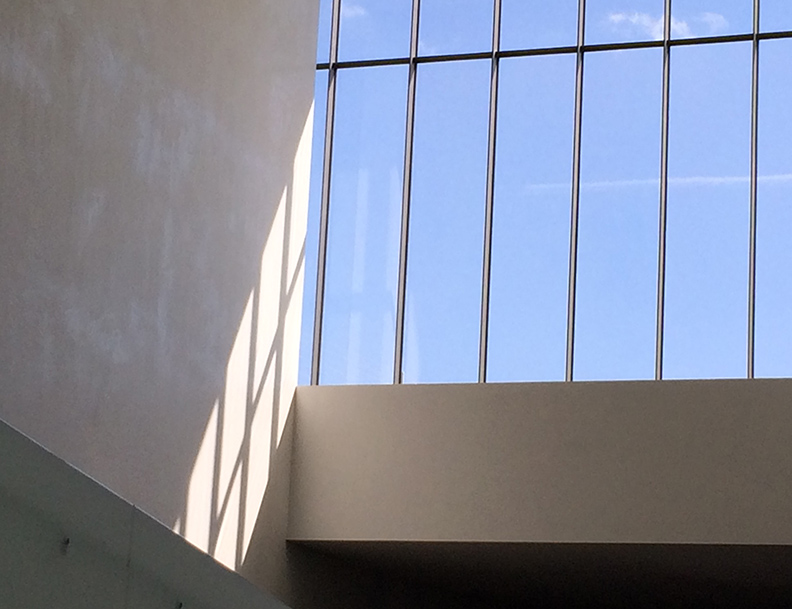
These were taken in one of the galleries of the Nelson-Atkins Museum of Art. I had high hopes for them, but for some reason my iPhone took a sequence of photos at very low resolution, and these were among them. Perhaps I can use these as a group. I did nothing to the files in Photoshop, which is unusual for me. Very often I crop images, and typically I do a little color correction and sharpening.

Dairy Queen bench ~

Dairy Queen bench and shadow

Dairy Queen bench and shadow

When I first started exhibiting photographs, in the early 1990s, I used metaphorical names for my abstract and semi-abstract works. In the past few years I’ve turned away from that; now most of my titles for such photographs simply say what things are. It doesn’t always work well, and sometimes I break my new rule. I’m uncertain about whether this photograph should have a different title. It’s a manipulated image of a bench and shadows at a Dairy Queen in Hoisington, Kansas. Pentax K-50, 18-50 mm zoom.

The Big Trip: The Nelson-Atkins and a quick sprint home ~

Yep, the Nelson-Atkins Museum of Art is the one with the shuttlecocks on the lawn.

Yep, the Nelson-Atkins Museum of Art is the one with the shuttlecocks on the lawn.

Bloch Building Addition, Nelson-Atkins Museum of Art, Kansas City

Bloch Building Addition, Nelson-Atkins Museum of Art, Kansas City

Bloch Building Addition, Nelson-Atkins Museum of Art

Bloch Building Addition, Nelson-Atkins Museum of Art

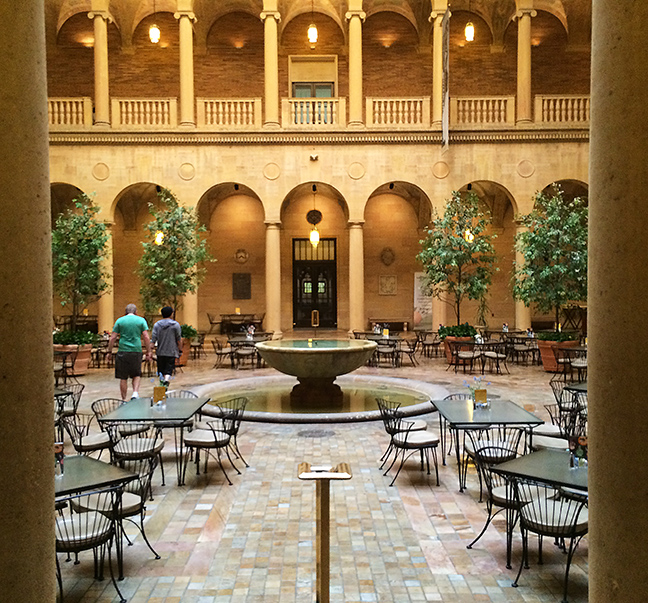
Rozelle Court, Nelson-Atkins Museum of Art

Rozelle Court, Nelson-Atkins Museum of Art

"Crow Call (Near the River)," Keith Jacobshagen. The artist is from Wichita, Kansas.

Detail of “Crow Call (Near the River),” Keith Jacobshagen, Nelson-Atkins Museum of Art. The artist is from Wichita, Kansas.

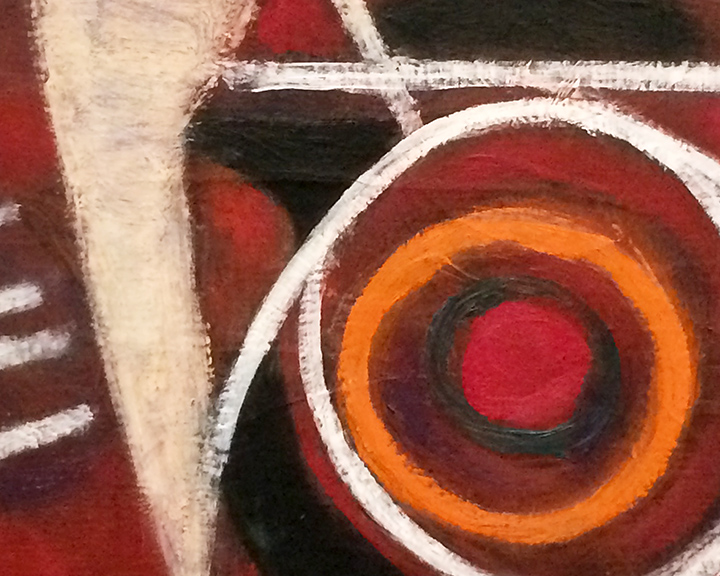
detail-of-'Pink-and-Indian-Red'-Adolph-Gottlieb-web

Detail of “Pink and Indian Red,” Adolph Gottlieb, Nelson-Atkins Museum of Art

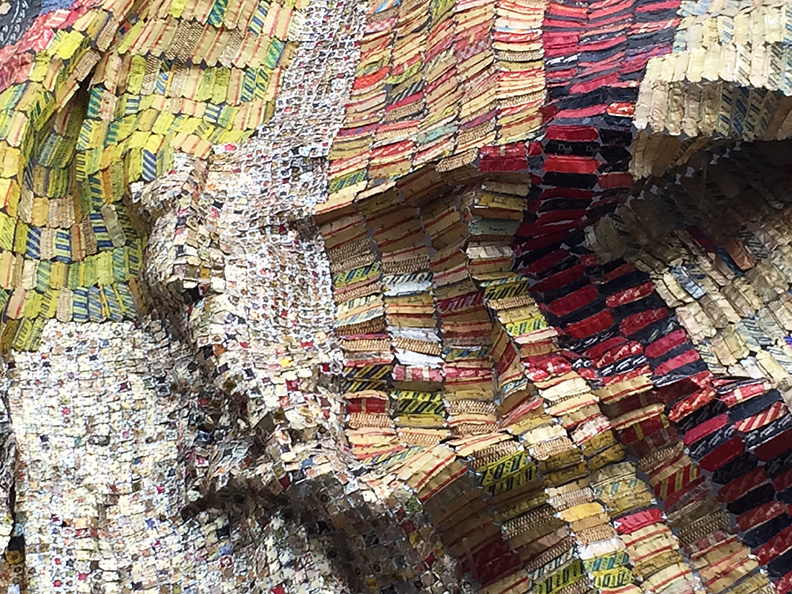
detail-of-'Dusasa-I'-El-Anatsui-web

Detail of “Dusasa I,” by El Anatsui, Nelson-Atkins Museum of Art. This work, a showpiece of the addition, is a very large wall hanging, several feet on each side, made of flattened liquor-bottle caps stitched together with copper wire. The artist, who was born in Ghana, now works in Nigeria.

Top of "Large Stack," Donald Judd, Nelson-Atkins Museum of Art.

Top of “Large Stack,” Donald Judd, Nelson-Atkins Museum of Art.

Days 14 & 15: Lawrence to Carbondale.

After an initial delay on Sunday morning, I made it at last to the Nelson-Atkins Museum of Art in Kansas City for my second visit. I spent most of my time in the Bloch Building, the 2007 addition to the museum by architect Stephen Holl. From the street to the east, the addition looks something like a series of connected trailers rising up a hill. But from the inside, it’s phenomenal, with light coming in from windowed towers and interesting angles everywhere. I hate to say this, but I found it far superior to my beloved St. Louis Art Museum’s more recent addition, both architecturally and in the modernist collections that both additions house. I spoke to a museum guard about the photos I was taking of the interior. He pointed out how each gallery opened up a new view via a few steps down into the next, leading the visitor through the building. In fact, he said, a photographer had been there earlier that day on behalf of the architect, who visits periodically.

I’ve included here small, low-res details of four or five of the works at the museum, hoping that constitutes “fair use” for copyright purposes. Most of my time was spent in the modernist collection. I never even made it to the photography galleries (irony!), and though I visited the main sculpture court, which has several Rodins, I was disappointed to have missed the Isamu Noguchi sculpture court. A next visit is in order. I spent my last 45 minutes at the museum trying to track down a still-life of lemons that I recalled vividly from my first trip. (I collect art postcards, and am often vexed that museums so seldom have my particular favorites in their shops.) I asked one guard if he recalled a painting like that. “Let me ask someone else,” he said. “I haven’t been here too long.” I couldn’t tell if he was actually contacting someone on his phone, and I told him Don’t worry, I’ll keep looking. I said I thought it was a European painting, and he said American.

I’d already made a mad dash through the European galleries, so I headed for the American art. No luck. I found another guard and asked her the same question. “Let me ask someone else,” she said. “I haven’t been working here that long.” She said she’d be back in a minute and I sank onto a bench to rest my feet and knees, still sore from the fall at Estes Park. Two minutes later she came around the corner with the first guard in tow. We both started laughing. But the first guard had, in the interim, gotten some information and gave me the exact number of a gallery that featured a painting with lemons.

Well, I’d been in that gallery, and this painting hadn’t stopped me. Memory is a tricky, tricky thing. Either that, or this was in fact a different still-life. It was a fine painting, and I took photos of it, but in my mind a very different painting still exists, with luscious, incredibly realistic lemon slices and…a fish, I think. Hmmm….

At closing time, I headed out of Kansas City for Boonville, where I stayed overnight. The next day, Labor Day, I was home by mid-afternoon, unloading the car and looking forward to getting the doggies out of the kennel on Tuesday. I was very tired, but I’d done my trip. It wasn’t like hiking across Africa or climbing Everest. It wasn’t even Paris. To most people it will seem a very modest achievement. But to me, debilitated after years of depression and anemia, this road trip loomed pretty large as an accomplishment.

I think I’m ready to do it again in a different direction.


The Big Trip: A perfect day in Kansas ~

Abandoned building, west-central Kansas: a time-honored photo cliché
Abandoned building, west-central Kansas: a time-honored photo cliché

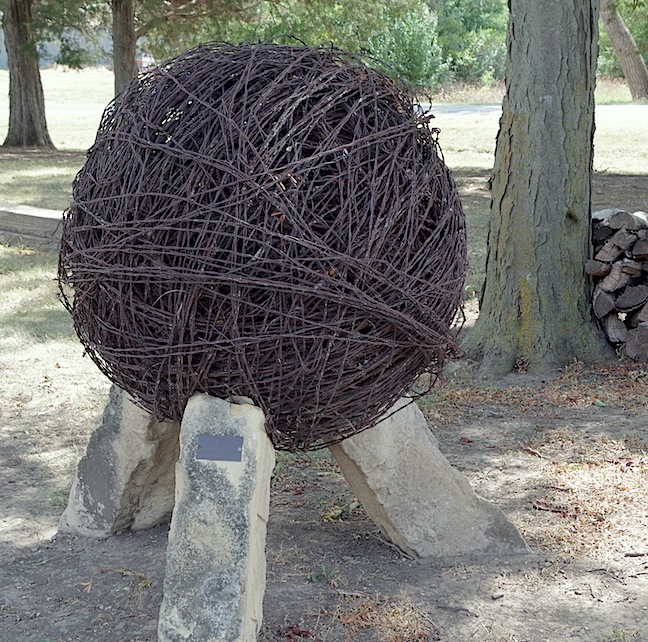
Ball of barbed wire, Kansas Barbed Wire Museum, LaCrosse, KS
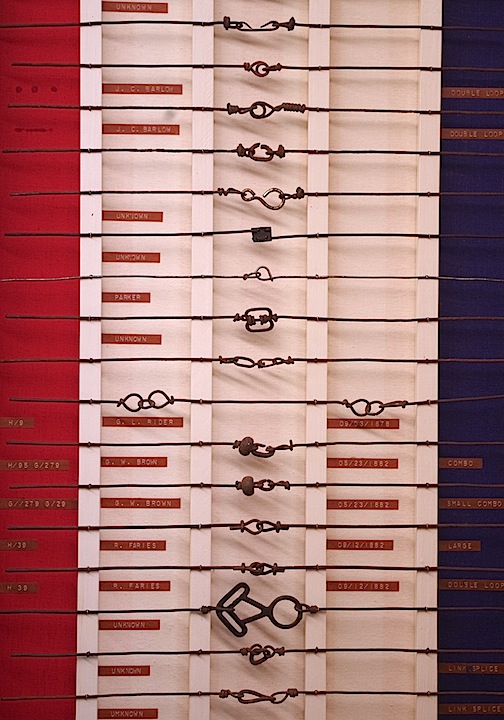
Ball of barbed wire, Kansas Barbed Wire Museum, LaCrosse, KS

barbed wire splices 1335 web

Barbed wire splices, Kansas Barbed Wire Museum

My first helicopter ride. Hoisington, Kansas.

My first helicopter ride. Hoisington, Kansas.

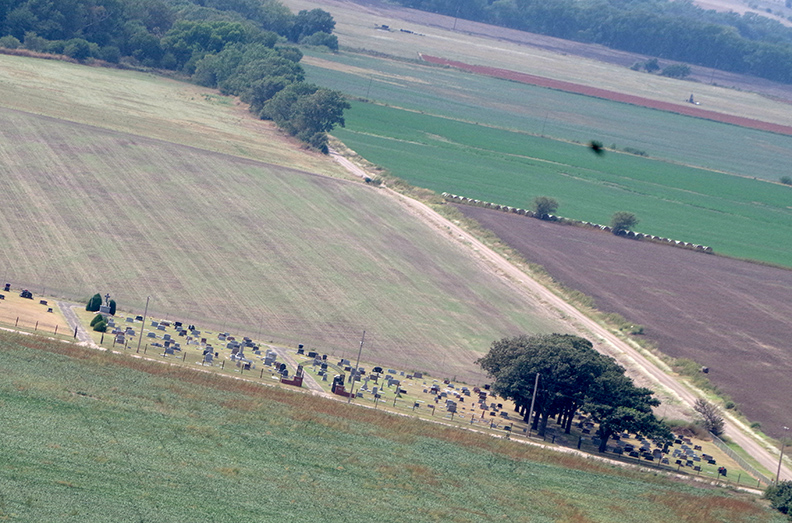
Helicopter view, Hoisington, Kansas.
Helicopter view, Hoisington, Kansas.

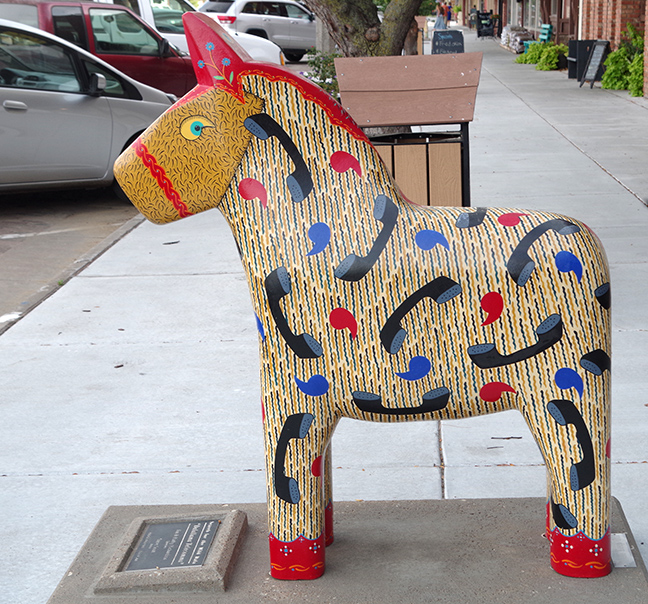
"Dalallama Telecomma," dala horse painted by Steve Scott, Lindsborg, Kansas

“Dalallama Telecomma,” dala horse painted by Steve Scott, Lindsborg, Kansas

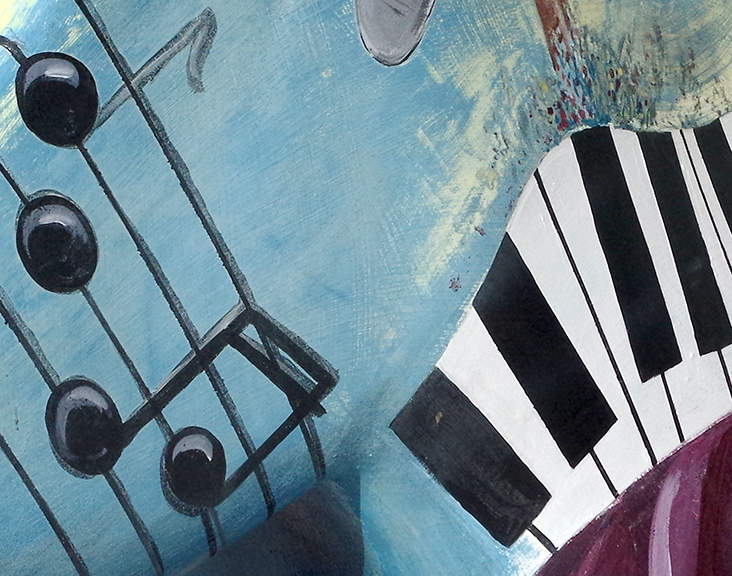
"Hello Dala," painted dala horse by Gretchen Elliott, Lindsborg, Kansas

Detail of “Hello Dala,” painted dala horse by Gretchen Elliott, Lindsborg, Kansas

detail-of-dala-horse-'Blossom'-by-Jennifer-Krob-web

Detail of “Blossom,” painted dala horse by Jennifer Krob, Lindsborg, Kansas

Cultivated sunflowers east of Lindsborg, Kansas
Cultivated sunflowers east of Lindsborg, Kansas

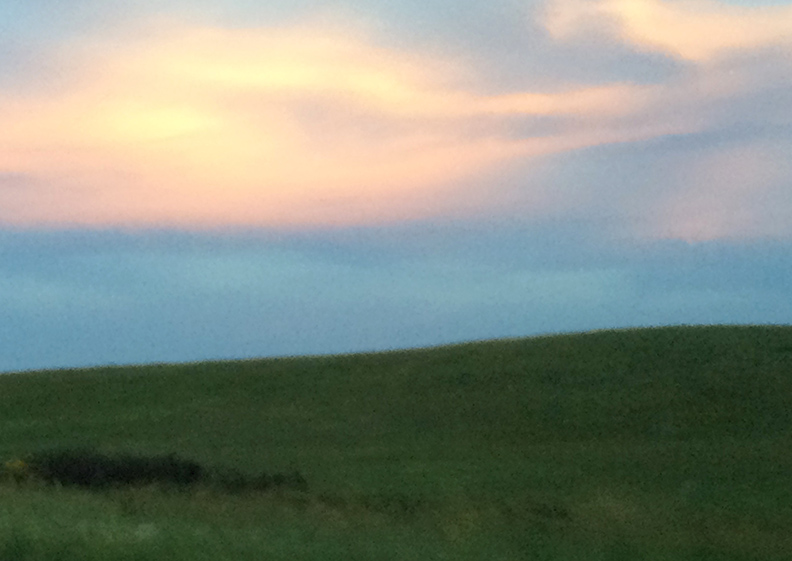
This through-the-windshield iPhone shot somewhere between Junction City and Lawrence, on the eastern edge of the Flint Hills, is so out of focus that it has an impressionistic quality.

This through-the-windshield iPhone shot taken somewhere between Junction City and Lawrence, on the eastern edge of the Flint Hills, is so out of focus that it has an impressionistic quality.

Day 13: Colby to Lawrence.

My destination for today was Lawrence, Kansas. From there it would be a quick drive to Kansas City on Sunday. Knowing I had plenty of time, I took back roads much of the day.

My first stop was at an old favorite: the Kansas Barbed Wire Museum in LaCrosse, Kansas. It was my third visit (I’m not making this up). There was a time years ago, before my late husband and I stumbled upon this place, when I no doubt thought barbed wire was barbed wire was barbed wire. Ha! Not a chance of it, and this little museum, which is always deserted, will set you straight. It has hundreds upon hundreds of variations of barbed wire, plus the tools needed to string and tighten it, plus all sorts of auxiliary items. The director estimates that about 500 patents exist for different types of barbed wire. But each patent can cover hundreds of variations; the total is mind-boggling. One Glidden barbed wire patent covers some 2,400 variations, for example. Among my favorite exhibits at the museum are two barbed-wire tornadoes and a huge crow’s nest made of scraps of barbed wire.

Before leaving, I asked the director where I might get a sandwich to eat. He suggested the Dairy Queen in Hoisington, about 15 miles to the east. It was an inspired choice, because if I hadn’t stopped at the DQ and idly picked up a brochure on the counter, I’d never have known that Hoisington was having a Labor Day festival and that one of the activities was helicopter rides, 40 bucks per passenger.

While I ate my cheeseburger I mulled that over. I’d never flown in a helicopter before, or even been inside one. The prospect was scary, yet enticing. When would I get such a chance again? I could at least look. So when I was done at the DQ, I backtracked, drove through (or rather, around) Hoisington’s downtown, and found the helicopter site. The copter looked awfully small. The pilots said they couldn’t afford to take up just one passenger. Okay, I said, I’ll wait a couple of minutes and see if someone else shows up.

Meanwhile I asked a bunch of stalling questions: Do I weigh too much to go? (Not even close; they could take a 300-pound passenger!) Wasn’t it too windy to fly? (No, helicopters love the wind!) I had fallen a couple of days ago and my left leg was hurting; would I be able to pull myself into the helicopter? (They’d help me!) I sat in my car, still ambivalent. Then a black SUV pulled up: father, mother, son, daughter. The son was first out, and it soon became clear that he and his dad were going up. The pilots waved me over, and I found myself plunking down two 20-dollar bills. I and the boy, who looked to be about 10, would be seated in the back, where there were windows. The pilot (a woman! yes!) and the dad would take the front seats, where there were no doors. “I’m scared,” the boy said matter-of-factly, without any visible sign of anxiety. “I guarantee you I’m more scared than you are,” I told him unwisely. “It’s bumpy,” he said (we hadn’t left the ground, but it did feel bumpy with the engines on). “Should we hold hands?” I said. “I’m going to hold on here,” he said, grabbing the bar between the back of the front seats. I did the same. And then we were up and off!

We were all wearing headsets so that we could hear the pilot and each other. “This is awesome!” the kid yelled as we began to fly over Hoisington. I was with him one hundred percent. I believe I might even have added “Woo!!” I was taking pictures like crazy, and the kid and I kept announcing how fun it was. It was wonderful fun. It was even fun when the helicopter banked significantly, though I was grateful I had a window next to me and not an open door. The ride, which lasted only four minutes or so, was far too short. I wanted to keep flying. Heck, I was ready to take lessons. But Lawrence awaited. I waved goodbye to the family, who were in fact from Hoisington, and headed down the road to Lindsborg.

This Scandinavian town was new to me. I got there at 5 p.m., so most places were closed except for an exceptional fair-trade shop called Connected. But Lindsborg hosts a sidewalk herd of painted dala horses. Wikipedia: “A Dalecarlian horse or Dala horse is a traditional carved, painted wooden horse statuette originating in the Swedish province of Dalarna. In the old days the Dala horse was mostly used as a toy for children; in modern times it has become a symbol of Dalarna, as well as Sweden in general. Several different types of Dala horses are made, with distinguishing features common to the locality of the site where they are produced.” In Lindsborg, the paintings on the horses may reflect the business where a given horse is located, or the interests of the sponsors or artist. One thing I noted is that the dala horses, which are chunky creatures, have no tails. I enjoyed photographing details of the paintings.

And then, as I was leaving the vicinity of Lindsborg, serendipity struck. I finally found what I’d been looking for all over Kansas and eastern Colorado: sunflowers! A whole big field of sunflowers with their heads still up (though, oddly, not facing the sun but facing east). I did what I could with my Pentax and my not-so-long lens, trying to get the best photo I could for me and my sunflower-loving friend Dinah.

At Salina I rejoined I-70. The rest of the drive to Lawrence was tedious, but it seemed to me that, all in all, I’d had the best possible day on the Plains.
The Big Trip: The Rockies, and then not ~

Streamside on Fall River cabin

Streamside on Fall River cabin

Fall River, Estes Park. In Southern Illinois we would call this a creek.

Fall River, Estes Park. In Southern Illinois we would call this a creek.

Beaver Meadows, Rocky Mountain National Park

Beaver Meadows, Rocky Mountain National Park

Rainbow Curve, Rocky Mountain National Park

Rainbow Curve, Rocky Mountain National Park

chipmunk at Rainbow Curve

chipmunk at Rainbow Curve

At Forest Canyon overlook, Rocky Mtn. Natl. Park

At Forest Canyon overlook, Rocky Mtn. Natl. Park

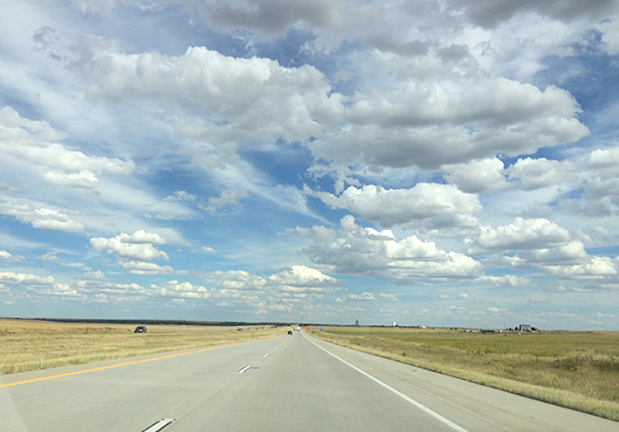
Heading home: eastern Colorado

Heading home: eastern Colorado

Day 12: Estes Park to Colby.

Yesterday evening was the sort of evening that reminded me of the disadvantages of solo travel, and today was the sort of day that made me grateful I was traveling alone.

After splurging on a cabin (technically, I had one-third of the cabin) on Fall River just west of Estes Park, I went into town, had a bite to eat, and then tripped on a step I didn’t see. Down I went on the concrete on my palms and knees. The only thing I remember thinking, other than “I can’t stop myself,” was “How will I get home?” I was close enough to the café to call for help; two of the wait-staff brought me ice and got me to my feet. I found out that I could drive if I was careful. I got back to the cabin just in time to catch the manager, who was on her way out, and she kindly brought me more ice and towels. I spent the rest of the evening feeling thankful that I hadn’t broken any bones or hit my head, and that it seemed I’d be able to drive a longer distance than the three miles from the middle of Estes Park to the motel.

The next morning I headed, somewhat gingerly, for Rocky Mountain National Park. I intended to spend only an hour or so. I wanted to visit the place where my sister and I had scattered our parents’ ashes 12 years ago, but I wanted to leave early and drive as far home as I could, because my calculations had shown me that, once again, I was due to reach Kansas City on a Monday or Tuesday, precluding a return visit to the Nelson-Atkins Art Museum for the sixth consecutive time. So I determined to drive two long days and get to K.C. on Sunday.

In the park, however, I took a wrong turn and found myself heading up into the mountains on Trail Ridge Road. That’s okay, I thought, I’ll just go as far as Rainbow Curve (the second major overlook from the east), see how I handle the altitude, and turn around.

I handled it fine. It felt so good, in fact, and the weather was so cool and delightful, that I made an abrupt change of plan: I’d drive all the way across the park, come down to I-70 on the west side, stay the night somewhere, do things in Denver for a day or two, and stretch out my arrival in K.C. to Wednesday.

By this point in the trip I felt that my 10-year-old Prius and I were practically fused, a virtual woman/machine hybrid. We were at one with each other, it seemed. Until Rainbow Curve. Shortly after I pulled out of the overlook, the car began laboring badly. I nursed it along, hoping it would shake off whatever the problem was. No such luck. At Forest Canyon overlook, 11,700 feet above sea level, I decided to turn around, get the Prius back down to Estes Park, and see if I needed to find a mechanic.

In town I got lunch at a place I’d noticed called “You Need Pie!” Yes, I did: that was truth in advertising. The car had no pie but seemed to be doing better nonetheless, so I headed toward Denver, a route that descends from about 7,500 feet to about 5.000. And soon the car was running normally again. I reverted to my original travel plan: drive like hell toward Kansas City. The car and I ended up in Colby, Kansas, together, reconciled, and back in our own time zone.