Orchids part 1 ~

These photos were taken at the Missouri Botanical Garden’s 2017 orchid show. I’ve carried various cameras to four or five of these shows, but this is the first time I felt pleased with more than a small handful of shots. It’s also the first time I was patient enough to photograph the identification labels, so I now can actually name what I took. Just call me a slow learner.

paphiopedilum-black-thorpe-p2060239

Paphiopedilum Black Thorpe. This is the orchid whose sexual organs were featured in yesterday’s post.

cattleya-los-gatos-p2060101

Cattleya Los Gatos

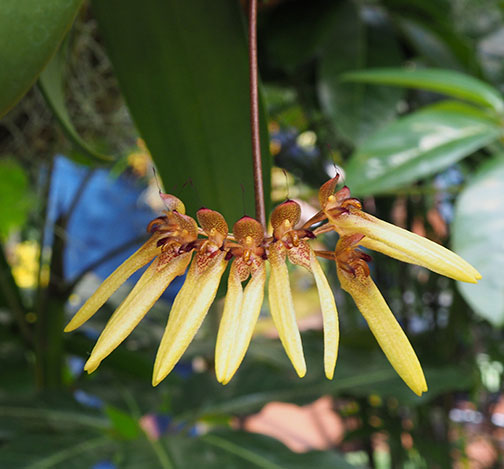
bulbophyllum-cumingii-p2060250

Bulbophyllum cumingii

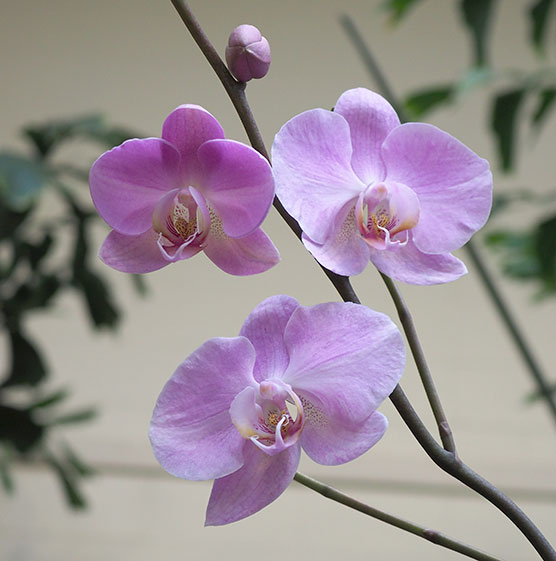
phalaenopsis-hampshire-clouds-p2060079

Phalaenopsis Hampshire Clouds

aliceara-purple-passion-p2060282

Aliceara Purple Passion

Naughty bits ~

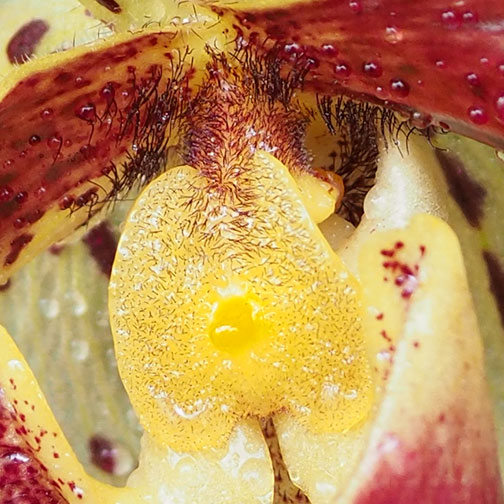
paphiopedilum-black-thorpe-cropped-p2060239

Paphiopedilum Black Thorpe

Flowers are pure sex out in the open, and that’s especially true of orchids, which are exquisitely adapted for pollination. The sheer sexuality of orchids has been commented upon so often that it is a cliché—but it’s a beautiful one. This is the first time I’ve taken a photograph that amounts to flower pornography. I’ll show the entire flower, along with a number of other orchid species, in my next post. Olympus OM-D EM10 II, 30 mm macro.

Pond eddy ~

pond-eddy-p2060143

Taken at the Missouri Botanical Garden’s 2017 orchid show. Olympus OM-D EM10 II with 30 mm macro lens (60 equivalent). I recently acquired this 4:3 mirror-less camera (which somehow stands up under the burden of that absurd series of letters and numbers), and so far I absolutely love it. It’s lightweight and small, which is a boon for my tendinitis-weakened wrists, but it seems to perform as well as my Pentax K-50. Best of all, you can shoot just by touching the LCD screen where you want the sharpest focus to be. No, Olympus didn’t pay me to praise this camera. What a shame! Next up: Orchids! Lots of ’em.

Blue moon ~

blue-moon-mural-1287

This cool mural is on the side of the Aims Community College building in downtown Loveland. The letters are shorthand for the four DNA bases (adenine, thymine, guanine, and cytosine); the numbers are the Fibonacci series through double digits—89, to be specific. Perhaps the doves are meant to represent human aspirations, since this is an educational institution. I’m guessing this mural was designed and painted by students, since Aims focuses on degrees in art and graphics.