Falling stars ~

star-painting-0856pie-pan-palette-0863pie-pan-palette-accidental-crop-0863

I was hoping this little experiment might look better onscreen. Alas, it doesn’t. There are about four other “paintings” under the top layer. I was trying things with brushstrokes and color, then I’d paint white over most of what I’d done and start again. The only original layer is the bottom right-hand corner, where I got a nice effect with the paintbrush that I couldn’t reproduce later.

As for the palette, I had a devil of a time trying to color-correct that photo and never did get it quite right. Then I got what I call an “accidental crop,” when I’m going from one history state in Photoshop to the prior one, and the piece of the photo that shows on my screen is a much more interesting crop than anything I tried. I really like these accidental crops, despite the resulting pixellation.

This may be the last palette photo I post, unless I get something more interesting, and definitely the last painting, unless I start to do better. Where are the people who were were so insistent I post these to my Facebook page?

My darling clementine ~

My clementine’s reddish and not very fine.
It looks like a pumpkin that came off the vine
To embrace a tomato lasciviously
And make a new hybrid that just shouldn’t be.
Since I’m a beginner, though, I’m free to say
That it looked just like this on my table today.


Palette 2-15-16 ~

exes-0819palette-cropped-2-0815

Not really getting into the painting tonight, I guess because I’m not trying to do anything in particular, just messing around with some fresh tubes of paint, trying a little blending and a little amateurish decoration. This may be a self-limiting experiment. However, I’ve confirmed that in fact blue and yellow still do make green, just like they did when I was in kindergarten.

Parakeet and palette ~

el-perico-0798

El perico

el-perico-cropped-0798

El perico – crop

palette-2-11-16-0800

Palette 2-11-16

the-face-in-the-paint-0800

The face in the paint

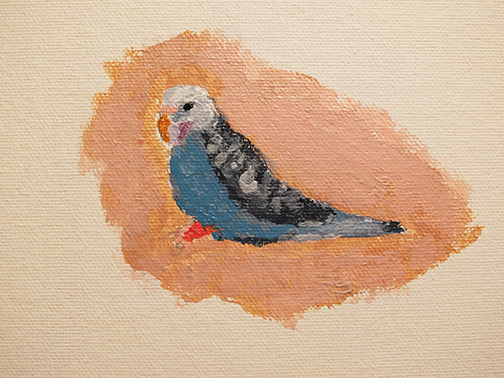
Since I’m also taking Spanish, I decided to use Spanish for the title of my little class painting today. The parakeet needs more work, but is, I think, at least identifiable as some kind of bird. But I’m feeling very excited about doing the close-ups. I needed something like this just now to get back to taking photographs. Can’t always be on a road trip. And I can do this no matter how cold or nasty it gets outside!

Painting class ~

first painting attemptspalettepalette-cropped

I’m taking my first painting class. Acrylics. Phrases like “Baby’s First Painting” or “Baby’s First Paint Set” keep running through my head. They publish books with titles like that, don’t they? Anyway, regardless of whether or not I prove to have any talent, I’m finding that this is a peaceful and interesting activity. Since my aim is ultimately to paint abstracts (of course!), I’m much more pleased with the appearance of the “palette” from tonight’s messing around than I am with the actual painting. (That messing-around painting is not shown above, in case you’re puzzling over the colors. The top photo shows what is supposed to look like a sphere, painted the first night in class, and what is supposed to look like an apple, which I painted last night in order to practice a bit with dimension in color.) I’m thinking that I could put different colors of paint in a paper bowl, blend them in different ways, photograph them, and just skip the applying-them-to-canvas part. This class may not set me on the road to becoming a painter in a traditional sense, but it may give me a new way of being an artist.

True blue skew ~

Steak 'n Shake table and chairs no. 1

Steak ‘n Shake table and chairs no. 1

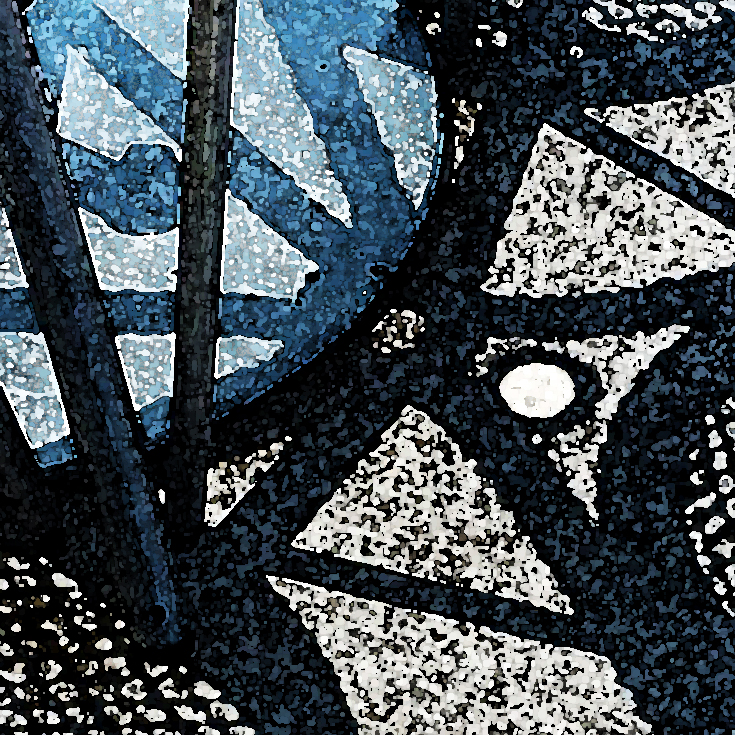
I’ve been having a good time playing with an iPhone photograph I took of tables and chairs at a Steak ‘n Shake in Goodland, Kansas. (I certainly took a lot more iPhone pix on my trip than I remembered having done.) Above is the version I like best. It’s highly cropped, with a watercolor filter applied, vibrance ramped up, blue ramped up. My favorites among the photographs I take tend to be those that look most like abstract paintings or that are clearly influenced by abstract painting. Applying a filter can, on rare occasions, turn an image into something more interesting. It also can, on rare occasions, save an image that is not sharp enough to work as a conventional photograph and make it worthwhile.

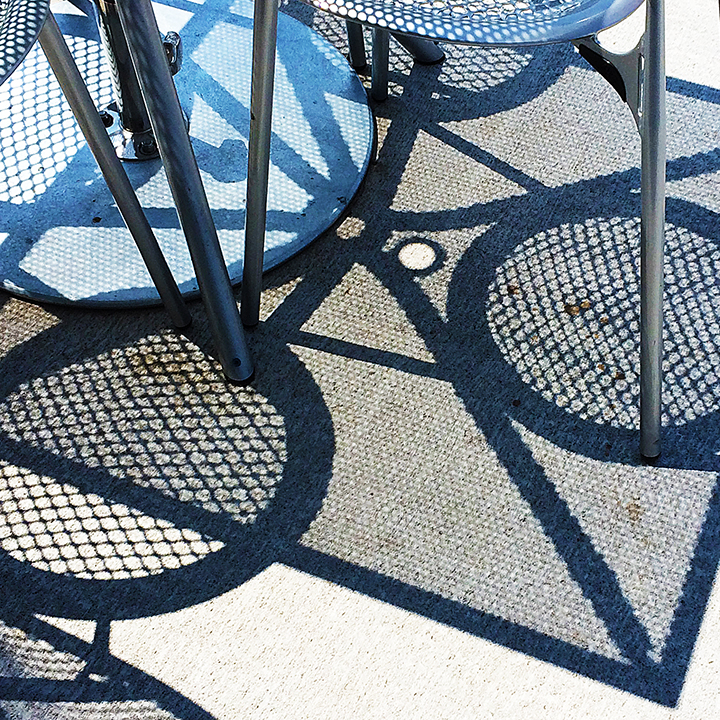
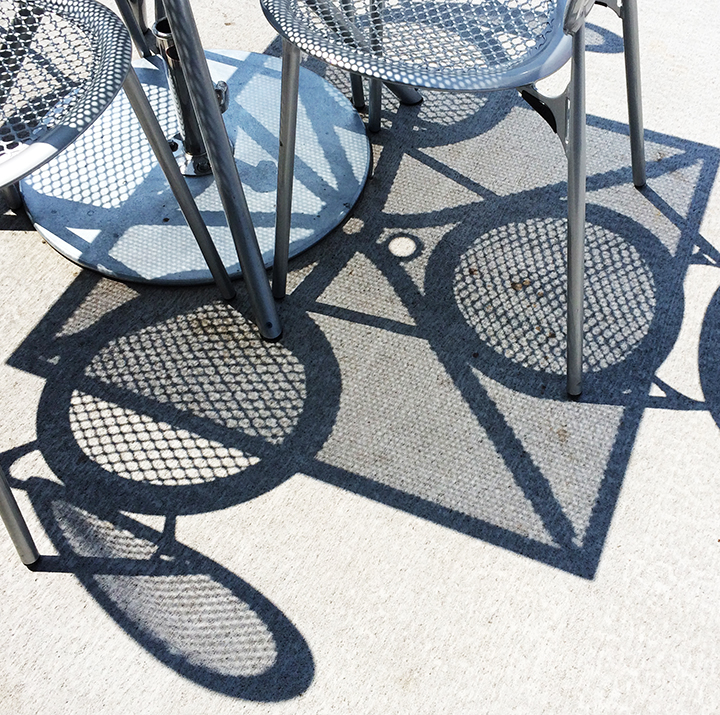
Here are two crops without the watercolor filter, and below those, the original photograph. I’m interested in feedback, so vote for your favorite if you’re so inclined. As a bonus, here’s a video of Lucinda Williams singing “Am I Too Blue.”

Steak 'n Shake table and chairs no. 3

Steak ‘n Shake table and chairs no. 3

Steak 'n Shake table and chairs no. 2

Steak ‘n Shake table and chairs no. 2

Steak-n-Shake-chairs-0164

Steak ‘n Shake table and chairs, original shot

Throwing art away ~

No art lasts forever, but some art is much more transient than the rest.

A good friend of mine posted a link on my Facebook page tonight that shows photographs of a Van Gogh painting reproduced large on the landscape via vegetation planted on a 1.2-acre plot. The artist is Stan Herd, who specializes in “land art” designed to be seen from the air. Most of his pieces are eventually plowed under or grown over.

The same transience characterizes the work of the well-known artist Andy Goldsworthy, who works primarily with sticks and stones, leaves, ice, and other materials found in nature. Most of his works are not destined for long life either. They melt, get blown away, wither, or are destroyed by water. Even more transient than Goldsworthy’s or Herd’s works are patterns made by artists on sandy beaches or snowy slopes, some of which last only a few minutes before seawater washes them away or the sun melts their borders.

Some conceptual artists play on the notion of transience by doing conventional work but deliberately planning its destruction. And the very nature of performance art is transience. Only the photographs and videos documenting these various types of art have any longevity, although they too will die some day.

It’s supremely ironic that my friend happened to post this particular link this evening that led me to muse about the transience of art—because this evening, after years of uncertainty, I had finally brought myself to put some art into the recycling bin.

When my husband died, in May 2008, he left behind three big acid-free boxes stacked full with 200 to 300 abstract paintings and other artworks interleaved with acid-free sheets. Most of these works were done with undiluted watercolors on paper. Some were done with ink; some were done via photocopier. Many of the paintings are flaking; some are wrinkled. Some are quite good; many are not, partly because Steve never discarded any of his efforts and partly because his mother and I have skimmed off the cream of the crop. They epitomized Steve as much as anything did. They were the best things he ever produced. To whatever extent anyone has a legacy, they were his legacy. And even though we were divorced a few months before he died, they became unofficially mine upon his death.

At least, I took them. A friend helped me clear out the house that Steve and I once shared, which I’d deeded over to him in the divorce. But neither of us could pry open the high cupboards in the sunroom that I thought contained the boxes of paintings. In a near panic, I dragged in a neighbor who worked and worked and finally got the doors open. I wept in relief. Although I didn’t know what I would do with the paintings, they were the most alive thing left of Steve and they had to be saved.

But where does art go when it has no future?

I framed a couple of the paintings for my house. But Steve and I had no children. He had no siblings. His father died less than five months after he did. In short, after I took the boxes to his mother and let her choose what she wanted, I was at a loss to know what to do with the paintings down the line. Like my own photographs, which will be thrown out or deleted by someone unknown to me after I die, his art has no prospective home.

I’ve kept the boxes for seven years. It seemed unthinkable to get rid of any of the paintings. But I recently told Steve’s mother I would bring them to her, along with the quilts she made us, to ensure that they would still be “in the family” if I died. A smart woman, she hit upon the idea of taking some of the paintings to next year’s family reunion in case any of Steve’s cousins want some of them. She couldn’t take 300 of them, however, and most people don’t much care for abstract paintings. The reality is that most or all of those paintings will be thrown out by someone after my ex-mother-in-law dies.

As I was going through the paintings one last time, choosing a few more that I hate to part with, I found myself putting aside some that I knew would never find a home among Steve’s cousins. Then I began putting aside more that I knew wouldn’t find a home. And finally I assumed the role of Steve’s curator, deciding which paintings were best and which should be sacrificed to make things more manageable for his mother.

Who was I to judge that? But it seemed best for me to do it—a favor, a burden, a debt, an obligation. At one point I just sat down and cried, because it seemed I was discarding his soul, a concept I don’t even believe in. I’m not sure which I was mourning more, the art or the artist. In some dimension, they are one and the same.

The Big Trip: A perfect day in Kansas ~

Abandoned building, west-central Kansas: a time-honored photo cliché
Abandoned building, west-central Kansas: a time-honored photo cliché

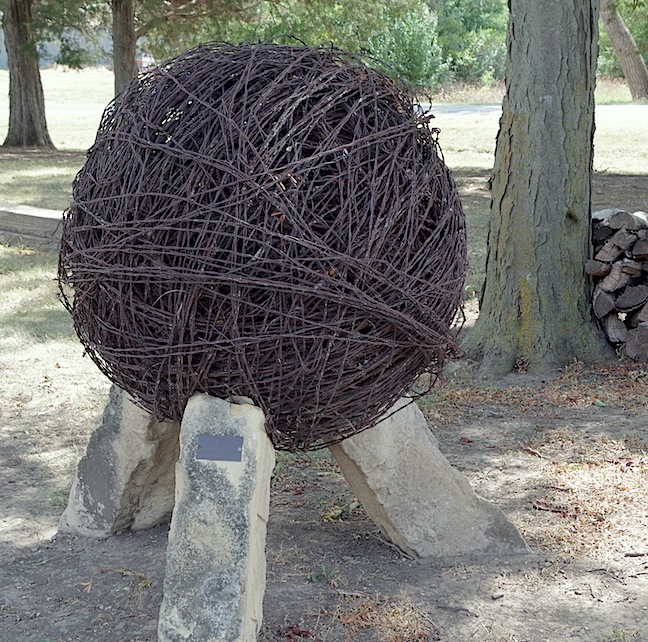
Ball of barbed wire, Kansas Barbed Wire Museum, LaCrosse, KS
Ball of barbed wire, Kansas Barbed Wire Museum, LaCrosse, KS

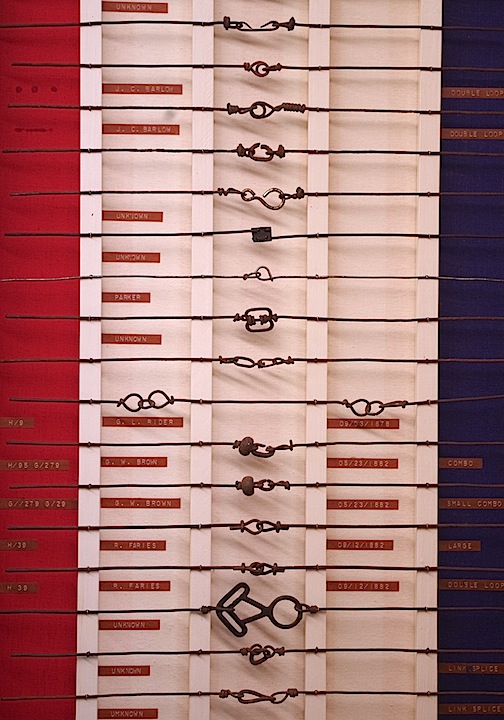
barbed wire splices 1335 web

Barbed wire splices, Kansas Barbed Wire Museum

My first helicopter ride. Hoisington, Kansas.

My first helicopter ride. Hoisington, Kansas.

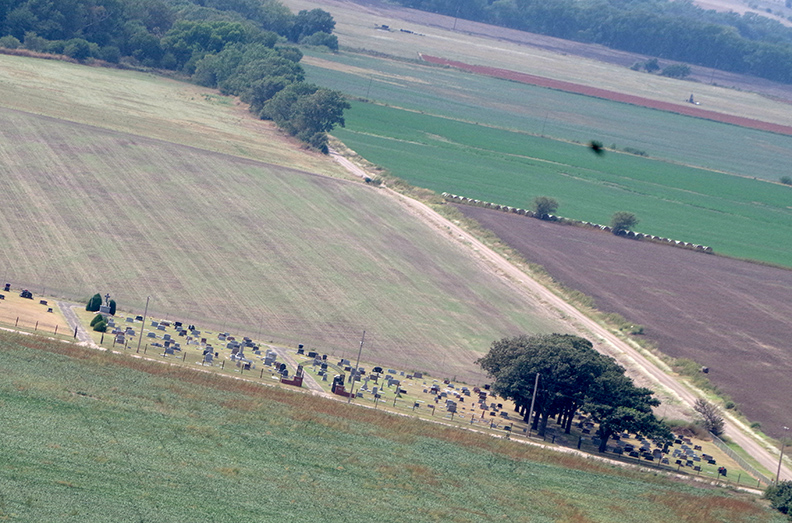
Helicopter view, Hoisington, Kansas.
Helicopter view, Hoisington, Kansas.

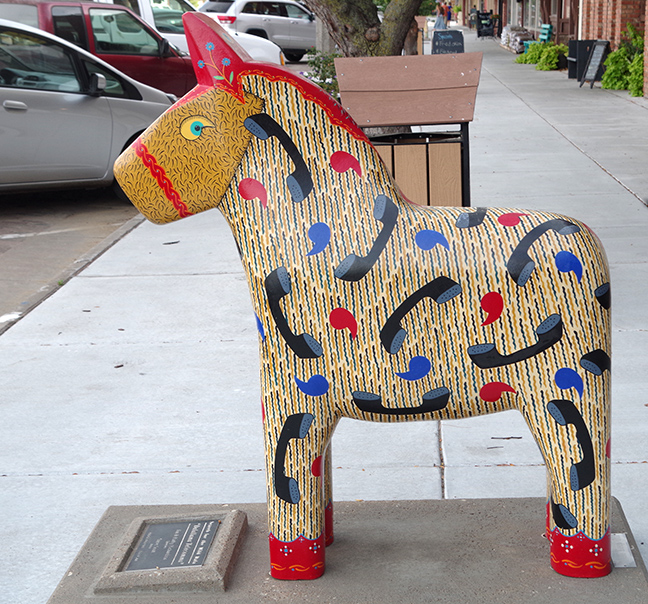
"Dalallama Telecomma," dala horse painted by Steve Scott, Lindsborg, Kansas

“Dalallama Telecomma,” dala horse painted by Steve Scott, Lindsborg, Kansas

"Hello Dala," painted dala horse by Gretchen Elliott, Lindsborg, Kansas

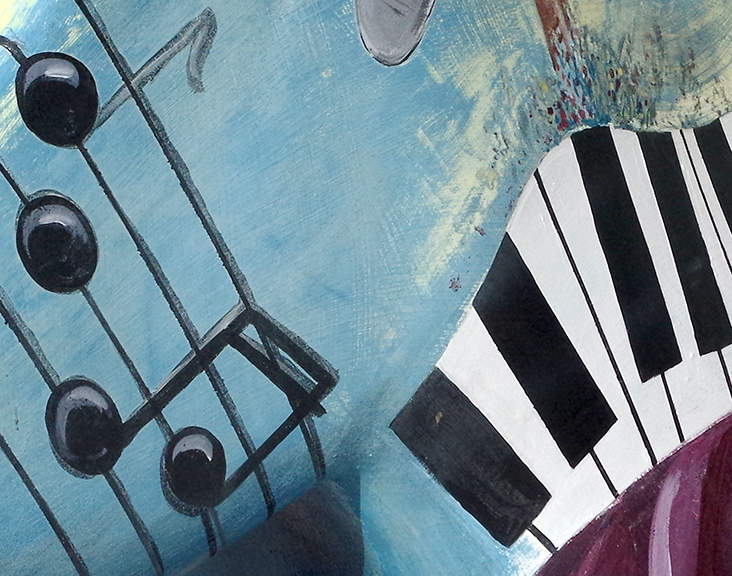
Detail of “Hello Dala,” painted dala horse by Gretchen Elliott, Lindsborg, Kansas

detail-of-dala-horse-'Blossom'-by-Jennifer-Krob-web

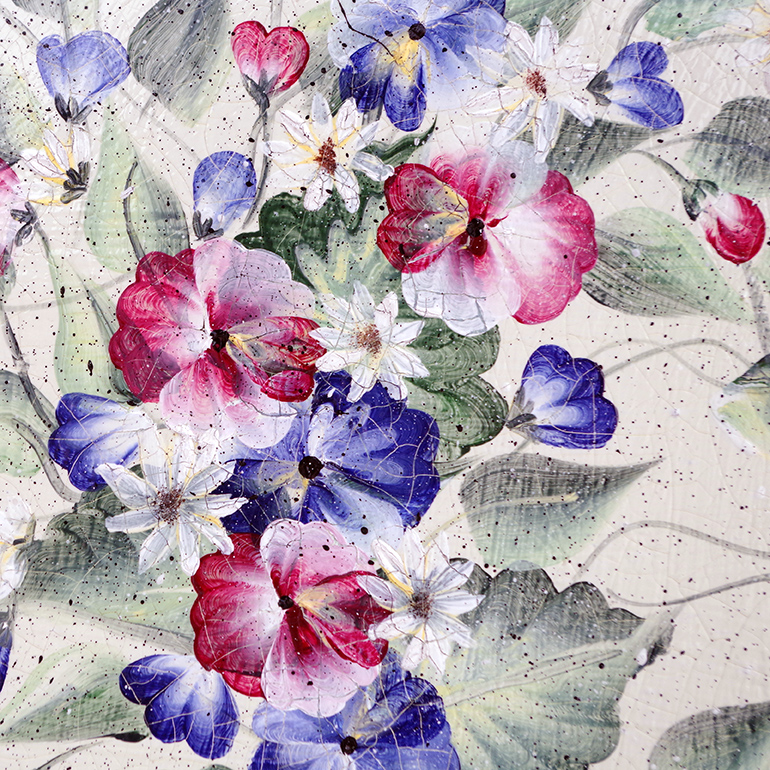
Detail of “Blossom,” painted dala horse by Jennifer Krob, Lindsborg, Kansas

Cultivated sunflowers east of Lindsborg, Kansas
Cultivated sunflowers east of Lindsborg, Kansas

This through-the-windshield iPhone shot somewhere between Junction City and Lawrence, on the eastern edge of the Flint Hills, is so out of focus that it has an impressionistic quality.

This through-the-windshield iPhone shot taken somewhere between Junction City and Lawrence, on the eastern edge of the Flint Hills, is so out of focus that it has an impressionistic quality.

Day 13: Colby to Lawrence.

My destination for today was Lawrence, Kansas. From there it would be a quick drive to Kansas City on Sunday. Knowing I had plenty of time, I took back roads much of the day.

My first stop was at an old favorite: the Kansas Barbed Wire Museum in LaCrosse, Kansas. It was my third visit (I’m not making this up). There was a time years ago, before my late husband and I stumbled upon this place, when I no doubt thought barbed wire was barbed wire was barbed wire. Ha! Not a chance of it, and this little museum, which is always deserted, will set you straight. It has hundreds upon hundreds of variations of barbed wire, plus the tools needed to string and tighten it, plus all sorts of auxiliary items. The director estimates that about 500 patents exist for different types of barbed wire. But each patent can cover hundreds of variations; the total is mind-boggling. One Glidden barbed wire patent covers some 2,400 variations, for example. Among my favorite exhibits at the museum are two barbed-wire tornadoes and a huge crow’s nest made of scraps of barbed wire.

Before leaving, I asked the director where I might get a sandwich to eat. He suggested the Dairy Queen in Hoisington, about 15 miles to the east. It was an inspired choice, because if I hadn’t stopped at the DQ and idly picked up a brochure on the counter, I’d never have known that Hoisington was having a Labor Day festival and that one of the activities was helicopter rides, 40 bucks per passenger.

While I ate my cheeseburger I mulled that over. I’d never flown in a helicopter before, or even been inside one. The prospect was scary, yet enticing. When would I get such a chance again? I could at least look. So when I was done at the DQ, I backtracked, drove through (or rather, around) Hoisington’s downtown, and found the helicopter site. The copter looked awfully small. The pilots said they couldn’t afford to take up just one passenger. Okay, I said, I’ll wait a couple of minutes and see if someone else shows up.

Meanwhile I asked a bunch of stalling questions: Do I weigh too much to go? (Not even close; they could take a 300-pound passenger!) Wasn’t it too windy to fly? (No, helicopters love the wind!) I had fallen a couple of days ago and my left leg was hurting; would I be able to pull myself into the helicopter? (They’d help me!) I sat in my car, still ambivalent. Then a black SUV pulled up: father, mother, son, daughter. The son was first out, and it soon became clear that he and his dad were going up. The pilots waved me over, and I found myself plunking down two 20-dollar bills. I and the boy, who looked to be about 10, would be seated in the back, where there were windows. The pilot (a woman! yes!) and the dad would take the front seats, where there were no doors. “I’m scared,” the boy said matter-of-factly, without any visible sign of anxiety. “I guarantee you I’m more scared than you are,” I told him unwisely. “It’s bumpy,” he said (we hadn’t left the ground, but it did feel bumpy with the engines on). “Should we hold hands?” I said. “I’m going to hold on here,” he said, grabbing the bar between the back of the front seats. I did the same. And then we were up and off!

We were all wearing headsets so that we could hear the pilot and each other. “This is awesome!” the kid yelled as we began to fly over Hoisington. I was with him one hundred percent. I believe I might even have added “Woo!!” I was taking pictures like crazy, and the kid and I kept announcing how fun it was. It was wonderful fun. It was even fun when the helicopter banked significantly, though I was grateful I had a window next to me and not an open door. The ride, which lasted only four minutes or so, was far too short. I wanted to keep flying. Heck, I was ready to take lessons. But Lawrence awaited. I waved goodbye to the family, who were in fact from Hoisington, and headed down the road to Lindsborg.

This Scandinavian town was new to me. I got there at 5 p.m., so most places were closed except for an exceptional fair-trade shop called Connected. But Lindsborg hosts a sidewalk herd of painted dala horses. Wikipedia: “A Dalecarlian horse or Dala horse is a traditional carved, painted wooden horse statuette originating in the Swedish province of Dalarna. In the old days the Dala horse was mostly used as a toy for children; in modern times it has become a symbol of Dalarna, as well as Sweden in general. Several different types of Dala horses are made, with distinguishing features common to the locality of the site where they are produced.” In Lindsborg, the paintings on the horses may reflect the business where a given horse is located, or the interests of the sponsors or artist. One thing I noted is that the dala horses, which are chunky creatures, have no tails. I enjoyed photographing details of the paintings.

And then, as I was leaving the vicinity of Lindsborg, serendipity struck. I finally found what I’d been looking for all over Kansas and eastern Colorado: sunflowers! A whole big field of sunflowers with their heads still up (though, oddly, not facing the sun but facing east). I did what I could with my Pentax and my not-so-long lens, trying to get the best photo I could for me and my sunflower-loving friend Dinah.

At Salina I rejoined I-70. The rest of the drive to Lawrence was tedious, but it seemed to me that, all in all, I’d had the best possible day on the Plains.

The Big Trip: Jazz and jumping beans ~

Part of neon sign collection, American Jazz Museum, Kansas City. The Fox’s Tap Room sign is original.

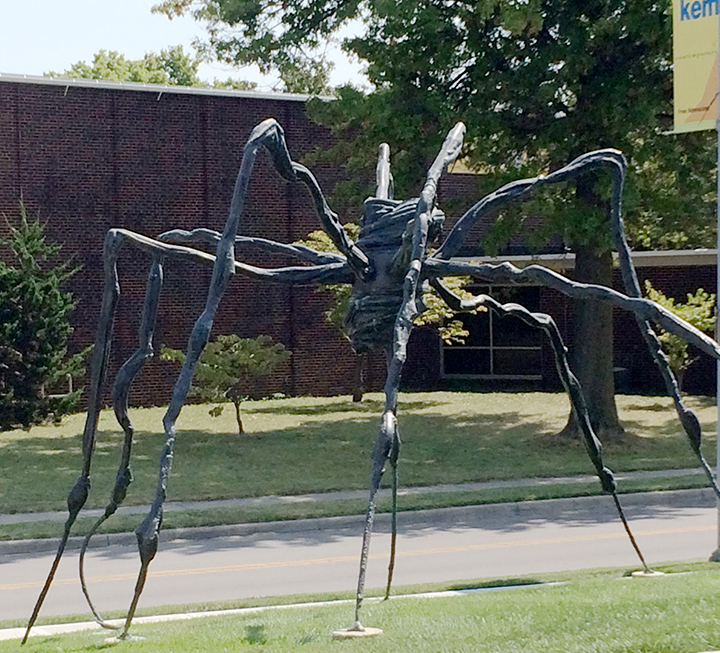
"Spider," by Louise Bourgeois, 1996. This sculpture serves as the Kemper's logo.

“Spider,” by Louise Bourgeois, 1996. Permanent collection of the Kemper Museum of Contemporary Art. This sculpture has been adopted as the museum’s logo.

Detail of "Bacchus," by Helen Frankenthaler, 2002. Permanent collection of the Kemper Museum of Contemporary Art.

Detail of “Bacchus,” by Helen Frankenthaler, 2002. Permanent collection of the Kemper Museum of Contemporary Art.

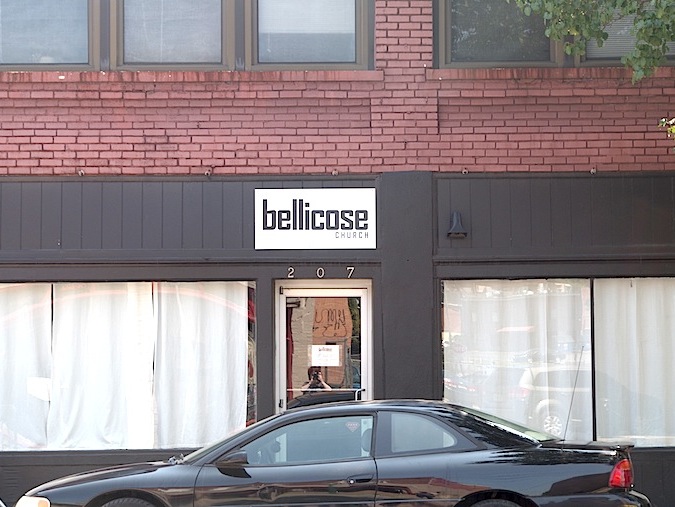
Bellicose Church, Kansas City

Days 2 & 3: Boonville to Lawrence.

Yesterday morning I left the Boonville Comfort Inn before 10:30, ready to face the “major delay” promised at mile marker 77. There turned out to be no delay, so I ended up parking outside the American Jazz Museum in Kansas City a little before noon. This is in the 18th & Vine district, where Charlie Parker came to prominence, so I listened to some of Parker’s music while I was driving to K.C. to put me in the right mood. (For those who haven’t seen it, “Bird,” starring Forest Whitaker as Parker and directed by Clint Eastwood, who is a jazz aficionado, is excellent; see what Roger Ebert had to say about it here). The museum was small but had lots of listening stations. I wandered around looking at the exhibits and listening to some classic jazz. The place was deserted. I would like to also have seen the Negro Leagues Baseball Museum, which is on the other side of the same building, but my legs needed a break and my stomach needed lunch.

I decided to look for a lunch place while en route to the Kemper Museum of Contemporary Art, which had been a disappointment when David and I visited in 2012. Why the Kemper? Because the Nelson-Atkins Art Museum is closed on Mondays and Tuesdays, and I always seem to be going through Kansas City on Monday or Tuesday. Argghh!

On the way a no-left-turn sign diverted me from my route and I found myself in a couple of gentrifying blocks. I photographed the sign for Bellicose Church, on the assumption that it was indeed some sort of place of worship and not, say, the design studio of someone who’d given himself a peculiar name. The typography was uncommonly good for a small church, or for pretty much any church. But I thought it was funny, whatever it was. (I just now looked it up and no longer find it funny. It is a church—a “missional community”—with this action statement: “We named our church Bellicose because we don’t believe that Jesus wants his church to be passive. Therefore we’re inclined or eager to fight for people’s hearts (John 15:13), aggressively hostile to the gates of hell (Matt 16:18, Matt 11:12), and warlike against sin (1 Pet 2:11, 2 Cor 10:3-5) — we’re aggressive in our love for God and people.” Well, at least they’re honest about it. But God save me from people who are aggressive in their love for God. So is ISIS.

After photographing the church facade, I went into, and back out of, a place called the Corner Café. I am indeed a total rube when it comes to food. I’m reluctant to try anything with ingredients that I need to have defined or that seem bizarre. For instance, one salad came with espresso vinaigrette, which seemed to be overreaching for originality. Every lunch entreé involved one or more such oddities, so I after I visited the Kemper Museum I sat in my car in the parking lot eating the string cheese, carrots, and almonds I’d packed, which was much cheaper and probably more healthful.

I spent very little time at the Kemper, which was again a disappointment because the main building has only a couple of small galleries devoted to their permanent collection. However, included in those galleries was an absolutely wonderful purple painting by Helen Frankenthaler called, appropriately, “Bacchus.” It alone was worth the visit. I took some photos, none of which begin to do it justice. Then I fell for a ceramic vase in the gift shop, which is precisely what happened the first time I went to the Kemper. Don’t go in museum gift shops when you’re tired and hungry: That should be one of my mantras. There is a vacation phenomenon whereby you give yourself permission to spend money on such things even though you tell yourself not to. And here I’ve been getting rid of as much stuff as possible at home.

I decided not to take the turnpike to Lawrence, but to go the southern route, through Overland Park. Once I got off 470 and onto Kansas Route 10, it seemed like I was in Lawrence in no time. I found the main drag easily, ate cheese ravioli and spanakopita at a Greek/Italian restaurant, then hit the nature store and the toy store that I’d spotted on my first drive-through. Oddly, given that I’d just mentioned Mexican jumping beans in my recent blog post on spirit animals, the nature store had some of those little clear boxes of beans on the checkout counter–the first I’d seen in years. The sales clerk, an older woman, knew about the larva, and about why they jumped. Some of the beans were in sunlight, and they did seem to be jumping more than the ones that were in shadow. “Here,” she said, handing me a section of newspaper. “If you put that over the display, they’ll stop jumping.” I did it, and bingo, the jumping stopped immediately. That was impressive. I did it a couple more times and told her about my blog post. I bought a 50-cent plastic lizard as a mascot for the trip and also an inexpensive but lovely fossil, an orthoceras–an ancient cephalopod that navigated by squirting water out of its body. The toy store, which was jaw-droppingly extensive, made me wish I knew someone with a little kid. It would have been great fun to explore the whole place and buy tons of presents.

This morning, in my motel room in Lawrence, I decided that I needed extra sleep before going to the Spencer Museum of Art, my main reason for stopping here. I ended up sleeping all day. In the evening I called the museum, which the AAA Tour Guide said was open until 8 p.m. on Wednesdays, and a recording announced that it was closed for renovations until sometime in 2016. So that was that.

I’d forgotten that when I sleep in the daytime, my dreams tend to be more nightmarish than usual. Now I’m feeling very bad emotionally, with my legs aching from driving, and I’m beginning to think about aborting the trip. The drive out seems overwhelming, and the drive back, impossible. Given everything I’ve learned about Fort Collins real estate in the last two weeks, it seems a fool’s errand to go out there. I’m also worried about my sister back in Carbondale, who has descended from hypomania back into depression, and I feel guilty about leaving the dogs in the kennel for so long. I’ve decided to put off the decision until tomorrow morning. I showered after getting up at 5:30 tonight, so tomorrow I can just get dressed, throw everything into the car, and take off. Whether west or homeward, I don’t know.