The spider and the hawk ~

With the exception of various insects and one very loud flock of Canada geese passing overhead, that’s all I saw today at the Frank State Wildlife Area, a bit southeast of Fort Collins on the Cache la Poudre River trail. And I don’t have a photo of either. The spider was a spindly thing the color of a liver spot; the hawk was far away. (I actually saw the spider a second time, on the way back. It had moved just slightly on the trail. Perhaps it wasn’t feeling well.)

Concrete is not what I think of as a trail, but this little section drew a lot of cyclists and walkers today, when the temperature was in the upper seventies. My dogs and I walked for about an hour. We didn’t cover much territory—less than 2 miles—but we were all thirsty and hot long before we got back to the car.

Frank S.W.A. is made up of recently reclaimed gravel pits, and parts of the area have been closed as recently as late 2015 for mining. I could hear traffic noise from a nearby two-lane highway the whole way—except for moments when the wind picked up. I’m still looking for a place to go out here on the plains near Loveland that doesn’t feature lots of traffic noise, or a view of houses. It was a nice walk, though, and will be much nicer when the trees leaf out. These are iPhone photos, rendered a bit shakier than usual due to the wind.

A new leaf ~

website_screenshot

I finally redesigned my photography website and it’s now live. Readers of this blog will find some photos that I’ve posted here, but also lots of older ones. These images were taken with a wide range of cameras. Some of the oldest were digitized from negatives; others were taken with a digital SLR, with a variety of point-and-shoots, with my new 4/3 Olympus, and with my iPhone. I hope you enjoy the website! Feedback is heartily invited.

Front range ~

boulder-county-1531

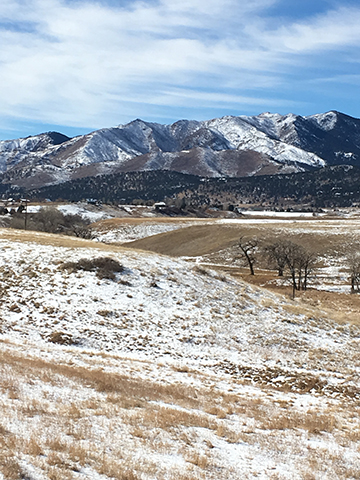
Northern Boulder County

OLYMPUS DIGITAL CAMERA

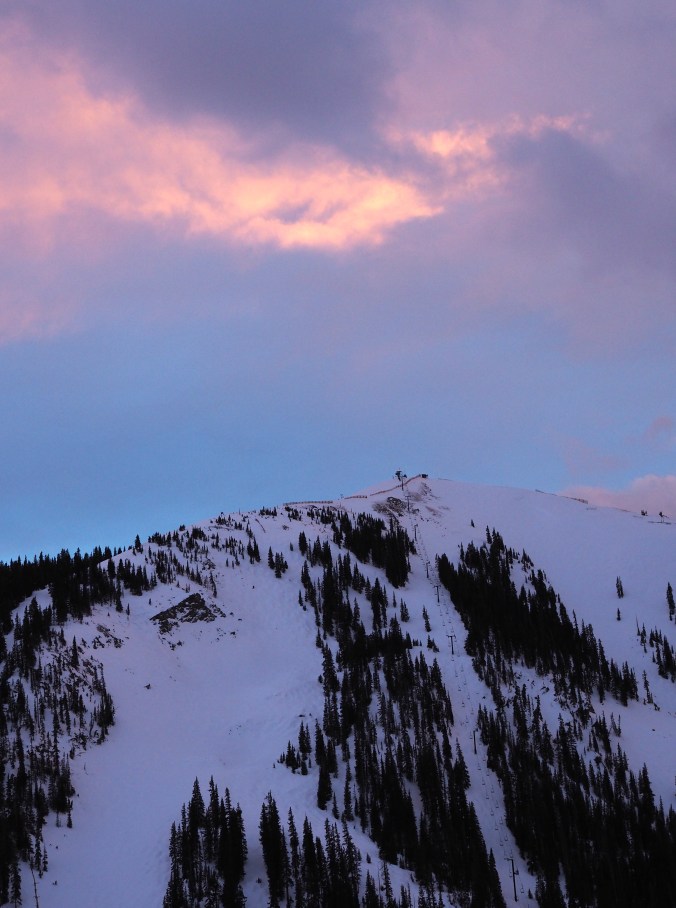
Arapahoe Ski Basin at sunset

OLYMPUS DIGITAL CAMERA

Loveland Pass at sunset

Recently I realized that I’ve been negligent about posting photographs of the Colorado landscape since I moved to Loveland. Here are three recent ones. The first was taken with my iPhone; the other two, with my new Olympus.

Orchids part 2 ~

rhyncholaeliocattleya-p2060149

Rhyncholaeliocattleya

phaiocalanthe-kryptonite-ursula-p2060273

Phaiocalanthe Kryptonite “Ursula”

cymbidium-tom-thumb-calliope-p2060242

Cymbidium Tom Thumb “Calliope”

phalaenopsis-carolina-tiny-phil-p2060138

Phalaenopsis Carolina Tiny Phil

phragmipedium-jason-fischer-p2060130

Phragmipedium Jason Fischer

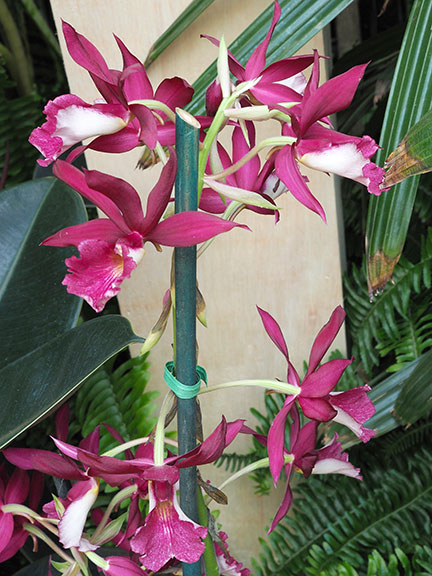
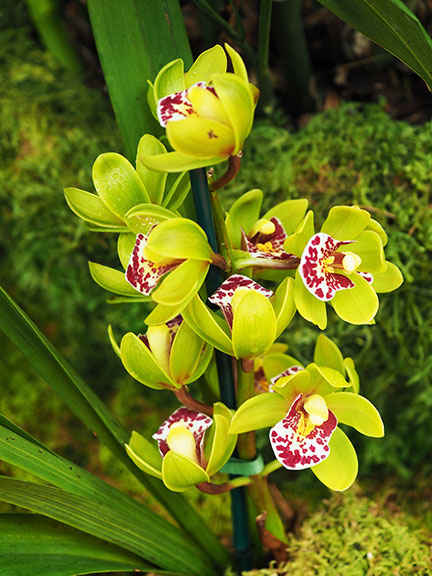
Taken at the Missouri Botanical Garden’s 2017 orchid show. I’ve probably written this before, but anyone interested in orchids should read “The Orchid Thief,” by Susan Orlean. It’s fascinating. It’s also the book that the movie “Adaptation” was loosely based upon.

Orchids part 1 ~

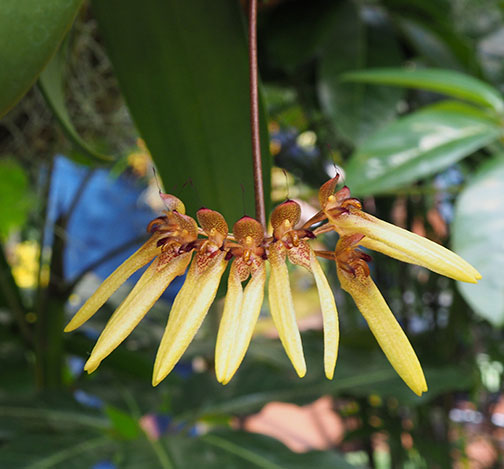
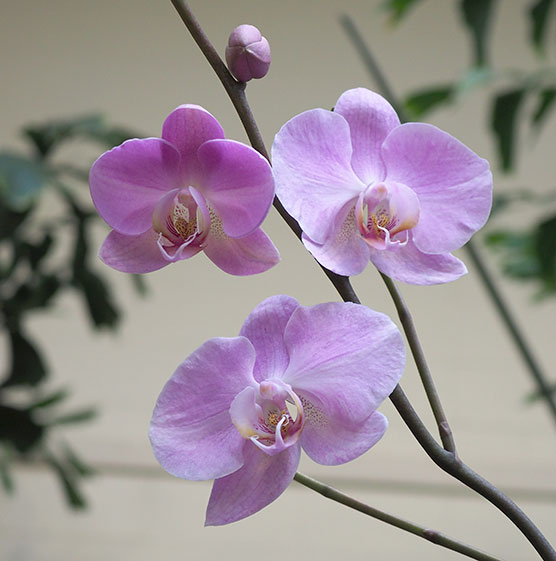
These photos were taken at the Missouri Botanical Garden’s 2017 orchid show. I’ve carried various cameras to four or five of these shows, but this is the first time I felt pleased with more than a small handful of shots. It’s also the first time I was patient enough to photograph the identification labels, so I now can actually name what I took. Just call me a slow learner.

paphiopedilum-black-thorpe-p2060239

Paphiopedilum Black Thorpe. This is the orchid whose sexual organs were featured in yesterday’s post.

cattleya-los-gatos-p2060101

Cattleya Los Gatos

bulbophyllum-cumingii-p2060250

Bulbophyllum cumingii

phalaenopsis-hampshire-clouds-p2060079

Phalaenopsis Hampshire Clouds

aliceara-purple-passion-p2060282

Aliceara Purple Passion

Naughty bits ~

paphiopedilum-black-thorpe-cropped-p2060239

Paphiopedilum Black Thorpe

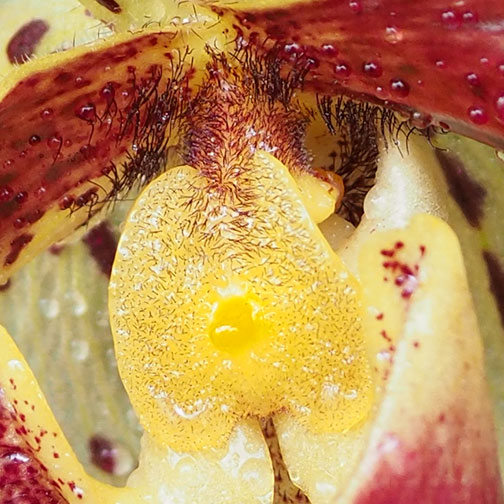
Flowers are pure sex out in the open, and that’s especially true of orchids, which are exquisitely adapted for pollination. The sheer sexuality of orchids has been commented upon so often that it is a cliché—but it’s a beautiful one. This is the first time I’ve taken a photograph that amounts to flower pornography. I’ll show the entire flower, along with a number of other orchid species, in my next post. Olympus OM-D EM10 II, 30 mm macro.

Parakeet omelet ~

image

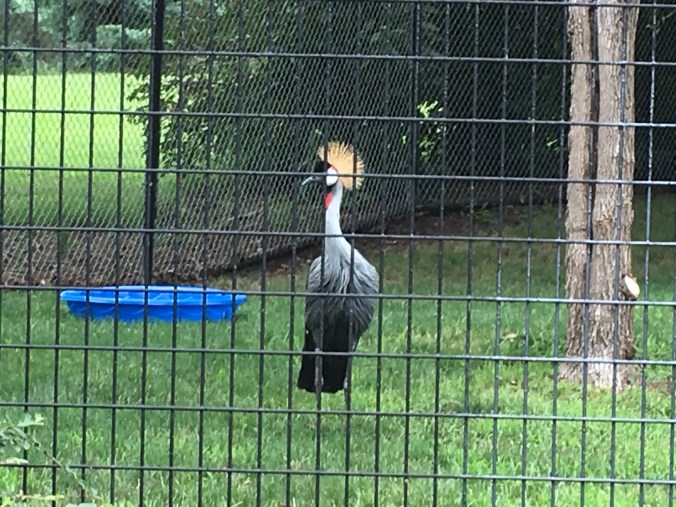
Crown crane

image

Snow leopard

image

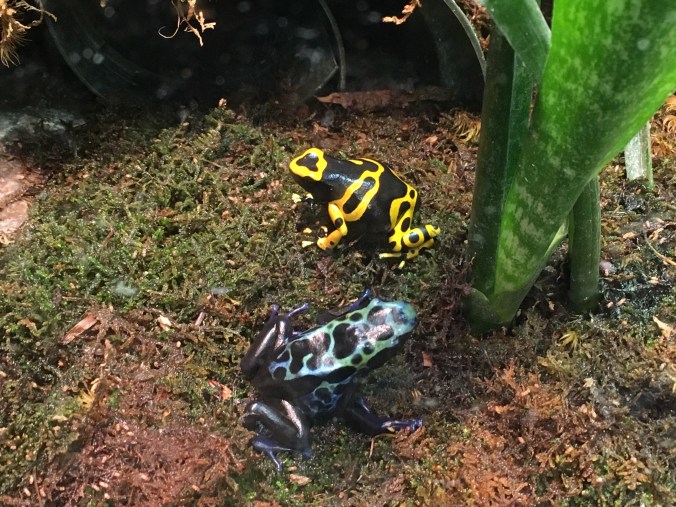
Dart poison frogs

image

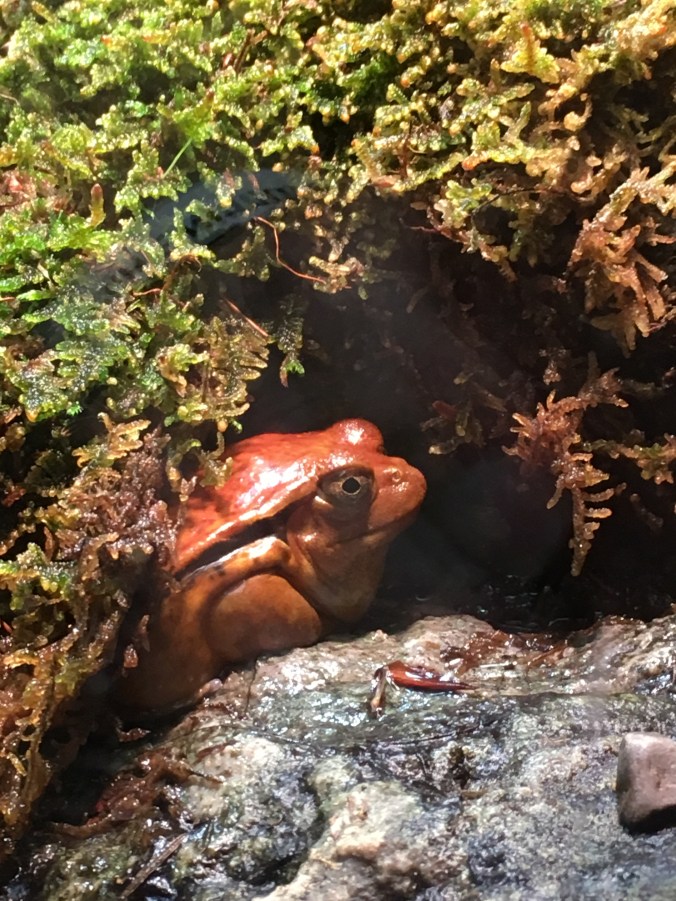
Tomato frog

image

Waxy monkey frog

Every time I’ve driven past Salina, Kansas, on I-70, I’ve taken note of billboards for Rolling Hills Zoo. Today I finally checked it out. It was mid-afternoon and hot, so most of the animals were napping in their dens or in the grass—barely discernible lumps of fur. After walking for awhile I got too hot, so I boarded the zoo tram at the next tram stop. I was the only passenger the whole way, so at every stop I talked to the young driver. He might have been 18. He might have been 16. He said he’d volunteered at the zoo for the past three years and this was the first year he was allowed to drive the tram. At our first stop he got off and stood by the tram looking at the giraffes in their enclosure and said thoughtfully, “I think this is the best place in the world.”

It is a beautiful place: gently rolling hills (the name is true) with trees everywhere and enclosures that allow the animals privacy if they don’t want to see humans. I told the boy that I was especially interested to see the crown crane, my favorite of the crane species. He said that it used to live in the giraffe enclosure and that he enjoyed just watching the things it would do. “It has a definite personality,” he said. “I notice that more about birds than mammals, maybe because I keep birds.”

Specifically, he keeps parakeets. “In the beginning I was hoping to breed them,” he said, “but you can’t tell the sex of a parakeet until it’s about a year old and it turned out I had all females.” Since they were laying unfertilized eggs, he once gathered about a dozen and made an omelet. “It was pretty small,” he said. He made a shape with his hands about the size of a little saucer. “They tasted just the same as chicken eggs, but instead of yellow they were almost transparent on the inside.”

This was a first for me, to meet someone who’d eaten a parakeet omelet. That alone was worth the stop. I wish now that I’d asked his name. He said his favorite part of working at the zoo was educating people about conservation, and that he hoped to go into conservation as a career.

I left the tram at the Wildlife Museum that’s a part of the zoo. This place has spectacular dioramas, but I was most interested in a special exhibit of frogs and toads. A video was playing and I heard the words “Southern Illinois University researchers led by Karen Lips discovered that frogs in Central America were dying off from the chytrid fungus….” That’s not a verbatim quote, but it caught my attention. Years ago, as the editor of SIU’s research magazine, I had interviewed Karen and learned about the alarming disappearances of amphibian species around the world due to this fungus, coupled—scientists think—with environmental stressors that have made the species especially susceptible to it. Karen and her team had chanced to be in Costa Rica and Panama at the very time this die-off was happening, and documented the event.

The exhibit included a large lighted panel with photographs of frogs and a quote from a Paul Simon song that, coincidentally, I’d been singing along to in the car just the day before:

“There is a frog in South America
Whose venom is the cure
For all of the suffering
That mankind must endure.”

He was talking about the dart-poison frog, of course. The song, “Señorita With a Necklace of Tears,” is on the album “You’re the One.”